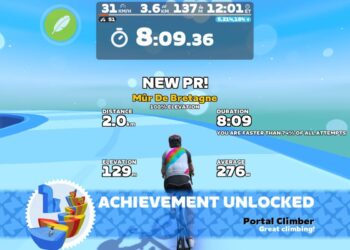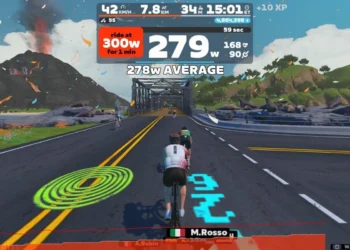

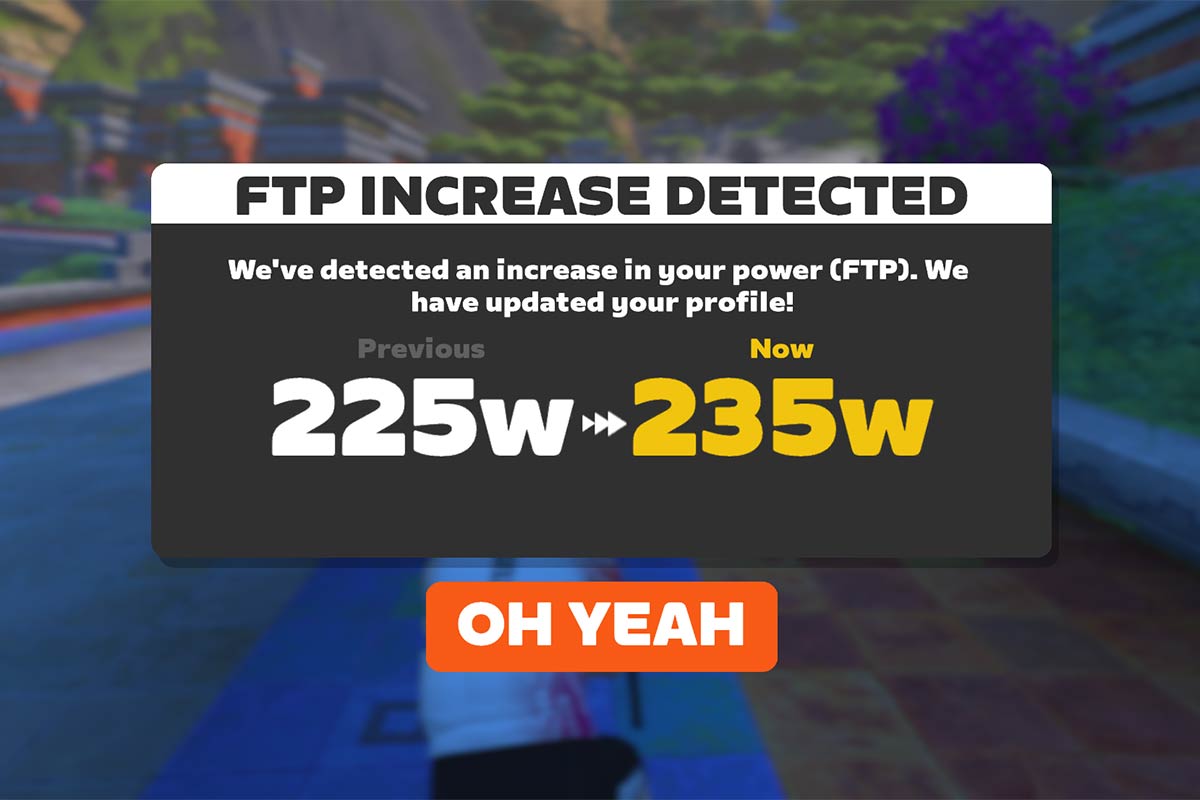
It’s barely been 10 days, but I’ve got Zwift telling me that thanks to a fry, a mug of coffee, and a serious stubborn streak on a Sunday, I’ve earned an increase in FTP.
I’ve also earned two stiff legs as a result given my sheer lack of preparation for this morning, or recovery. The route wasn’t even intended, but a 90-minute window appeared in my day and rather than sit about the house, I got to work. Shorts on, headphones on, F1 (the movie) on and away we go.
Using the ramp test from 17 January as a base, the increase could be either
- A glitch in the matrix, with my stubborn streak carrying the load as opposed to form and technique, or
- A better reflection of where I’m actually at, as opposed to where I think I’m at, considering the layoff last year
Either way, for the uninitiated, what an increase in FTP will do for you in Zwift, however big or small, is start by adjusting baselines and training zones effective from your next workout, meaning with every increase, you’ll be working a little harder. But I’m ok with that. Small gains now, big wins later.
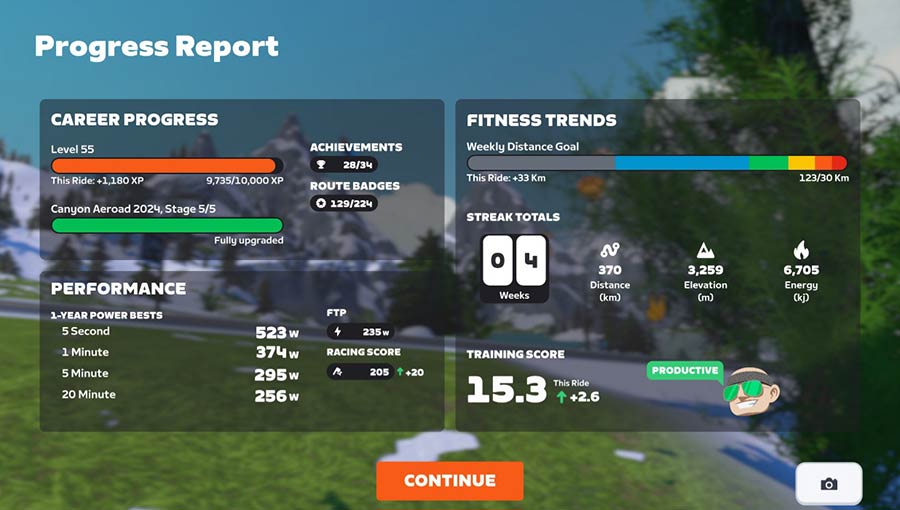
Taking a look at ZwiftPower.com as well (it’s been a while), I can see that I’ve slipped back into Category D for racing, which suits me down to the ground. 2024 into 2025 saw a quick rise from Category E up to C, taking last year’s Tour de Zwift races at Category B.
Granted, I was also almost 9kg lighter, but I’ll take that too. There’s no interest in racing at the moment as it warrants being in a different headspace and way more prepared, so I’ll happily take a little nudge in workouts heading into February.
No idea what’s going on? Read Sean Hurley’s piece on defining functional threshold power for TrainerRoad.com.
On we go.