
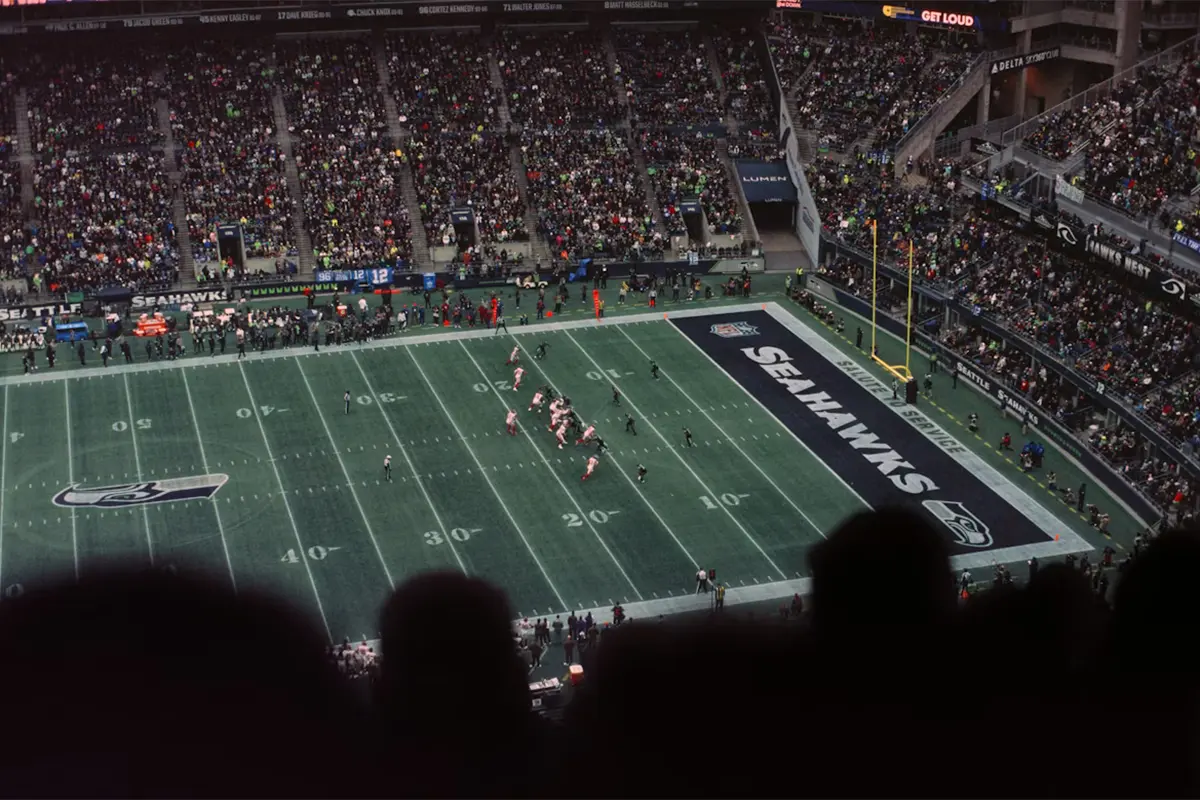
On Sunday, 8 February 2026, as the Seattle Seahawks dismantled the New England Patriots 29-13 at Levi’s Stadium in Santa Clara, California, something remarkable was happening between the plays.
Every timeout, every quarter break, every pause in the action represented advertising’s most expensive real estate changing hands at unprecedented prices.
Welcome to Super Bowl LX, where thirty seconds of airtime costs more than you or I will earn in a lifetime.
While the game itself wasn’t much to look at (my own interest was waning even before Bad Bunny came out for his colossal half-time show), interest in the advertising around the All-Ireland Sunday of American Football remains at a premium.
Eye-watering economics
Let’s start with the figure that makes chief financial officers wince: $8 million. That’s the average cost of a 30-second advertisement during Super Bowl LX, as confirmed by NBCUniversal’s Mark Marshall, chairman of global advertising and partnerships.
But the truly extraordinary detail? A handful of premium placements, those coveted slots immediately before kick-off or during the halftime lead-in, sold for more than $10 million each. That’s a new record, and it works out to roughly $333,000 (or €279,000) per second, or approximately the cost of a modest family home outside of the M50 for every blink of an eye.
To appreciate how remarkable this is, consider that during the first Super Bowl in 1967, those same thirty seconds as the Packers were beating the Chiefs 35-10 cost just $37,500. Adjusted for inflation, that’s roughly $350,000 (around €295,000) in today’s money. The actual 2026 price is more than twenty times higher in real terms, a staggering demonstration of the event’s enduring and growing commercial power.
NBC sold out all advertising inventory by September 2025, the fastest sellout in Super Bowl history, a full five months before anyone knew which teams would be playing. The network reported total advertising revenue approaching $600 million from a single four-hour broadcast, more than the annual advertising revenue of most cable networks in the US combined.
An audience unlike any other
So what justifies these astronomical prices? The answer is simple: reach. Super Bowl LIX in 2025 drew a record 127.7 million viewers in the United States alone, making it the most-watched television broadcast in American history, surpassing even the 1969 moon landing. Projections for Super Bowl LX suggested similar or higher numbers, with the National Retail Federation estimating that 213.1 million American adults planned to watch the game. At the time of writing, Sunday night’s figures have yet to be released.
The international audience adds substantially to these figures. In 2024, the NFL reported 62.5 million global viewers outside the United States, a 10% increase from the previous year, with particularly strong growth in Mexico, Canada, the United Kingdom, and Germany. Combined domestic and international audiences typically exceed 150 million, with some analysts suggesting the true global reach approaches 200 million viewers.
Bad Bunny’s halftime show performance generated over 167 million social media engagements, more than double the 80 million generated by Kendrick Lamar’s acclaimed 2025 performance. This is no longer merely a sporting event. It’s a cultural phenomenon that commands attention across demographics, geographies, and generations.
Why do brands pull out all the stops?
In an era of fragmented media consumption, where audiences scatter across streaming platforms, social networks, and countless content sources, the Super Bowl represents something increasingly rare: guaranteed mass attention. As one media buyer told Adweek, “The Super Bowl is the only time of year when viewers don’t skip the ads; they actually turn up the volume.”
Research from Stanford Graduate School of Business has demonstrated that Super Bowl advertisements can generate significant increases in sales revenue, with one study estimating that Budweiser earns an extra $96 million from its ads, representing a return on investment of 172%. The University of Virginia’s Darden School of Business found that a single Super Bowl ad is approximately 25 times more effective than a regular television advertisement at driving brand perceptions.
The phenomenon extends beyond immediate sales impact. Super Bowl advertisements become cultural talking points, generating earned media coverage worth millions more. According to Marketing Dive, Super Bowl LX generated $550 million in earned media value for brands on social media. Companies aren’t merely buying thirty seconds of airtime; they’re purchasing a seat at the biggest conversation of the year.
Super Bowl LX: The ads that defined the night
This year’s advertising slate featured a shade over 100 celebrity appearances across 39 advertisements, a testament to the stakes involved. Production costs regularly run between $4 million and $10 million on top of the airtime cost, with celebrity fees adding a potential extra $2 million to $5 million. Total campaign investments, including teasers, social media extensions, and promotional activities, often land between $15 million and $50 million. And that’s before we get into the AI end of things for Super Bowl LX, with 15 out of the 66 ads airing during the Super Bowl featuring AI.
The Standouts
Northwestern University’s Kellogg School of Management, which conducts annual post-game advertising analysis, rated Google’s Gemini AI advertisement as the evening’s best. The spot, titled New Home, depicted a mother and young son using the AI platform to visualise their new house with different paint colours and a redesigned garden, striking an emotional chord whilst demonstrating practical utility.
Budweiser’s Clydesdale advertisement, featuring a horse growing up alongside a bald eagle set to Free Bird, earned the highest consumer ratings, continuing the brand’s decades-long tradition of heartwarming animal-focused storytelling.
Dunkin’ delivered nostalgic comedy gold by reimagining the film Good Will Hunting as a 1990s sitcom, featuring Ben Affleck alongside cameos from Jennifer Aniston, Matt LeBlanc, Jason Alexander, Ted Danson, and Tom Brady. One of my personal favourites of the night because, well, 90s.
Sabrina Carpenter’s Pringles advertisement imagined her in a fairytale romance with a man made entirely of crisps, whilst Amazon’s Alexa+ spot cleverly sent up AI fears with Chris Hemsworth and Elsa Pataky navigating comic domestic chaos. To be fair, the latter is good.
Matthew Broderick also got in on the AI action in taking the Monday after the Super Bowl off.
Hollywood’s big night
Film studios used the platform extensively, too, and why wouldn’t you with the guts of 150 million eyes on you for the night?
Disney premiered footage from The Mandalorian and Grogu, due in May, whilst Illumination showcased The Super Mario Galaxy Movie with Yoshi and the infant versions of Mario and Luigi.
Steven Spielberg’s mysterious alien drama Disclosure Day, starring Emily Blunt, offered tantalising glimpses of extraterrestrial contact. Netflix surprised viewers with the first look at The Adventures of Cliff Booth, a Tarantino-penned spin-off of Once Upon a Time in Hollywood directed by David Fincher and starring Brad Pitt.
Scream 7 continued its promotional campaign with Neve Campbell returning to the franchise, whilst Ryan Gosling’s Project Hail Mary promised interstellar adventure. The Michael Jackson biopic Michael announced its April release, and DC teased Supergirl with footage of Milly Alcock alongside her superdog Krypto.
Empire has more on the movie trailer rollout here.
The Misses
Not every advertisement landed successfully.
Coinbase received a failing grade from the Kellogg review panel for producing a commercial that failed to clearly communicate what the cryptocurrency exchange actually does.
Liquid Death’s advertisement featuring exploding heads polarised viewers, whilst some observers noted that The Mandalorian and Grogu trailer felt more like a car commercial than a film preview.
The Evolving Landscape
Super Bowl LX revealed several significant industry trends. Almost 40% of this year’s advertisers did not participate in 2025, indicating substantial category rotation. Technology and pharmaceutical companies increased their presence, whilst automotive manufacturers largely retreated from the game, deterred by the $8 million price tag and industry uncertainties surrounding electric vehicles and tariffs.
Research from Darden’s Kim Whitler documented a 79% increase in advertisements featuring both male and female celebrities, reflecting efforts to appeal to broader demographics (based in 2025, at least). The use of nostalgia rose dramatically, with over 45% of advertisements incorporating nostalgic elements compared to just 28% in 2015. Animals continue to perform exceptionally well, with advertisements featuring animal protagonists consistently outperforming all other categories.
The integration of teaser campaigns and social media extensions has become standard practice, with brands stretching their Super Bowl investments across multiple platforms and timeframes. NBC’s “Legendary February” strategy, bundling Super Bowl advertising with Winter Olympics and NBA All-Star Weekend packages, saw 70% of Super Bowl advertisers also purchasing Olympics inventory.
The ultimate advertising platform
As the Seahawks celebrated their 29-13 victory and running back Kenneth Walker III collected the MVP award for his 135-yard rushing performance, the advertising industry had already begun analysing which brands had won and lost in their parallel competition. Nike closed the broadcast with a clever Marshawn Lynch spot referencing the heartbreak of Super Bowl XLIX, when the Seahawks famously lost to the Patriots on the goal line: “Nothing tastes as good as getting your lick back.”
For advertisers, the Super Bowl remains the ultimate paradox: simultaneously the most expensive and potentially the most valuable advertising platform on Earth. In a world of ad blockers, subscription streaming, and infinite content choices, it represents perhaps the last moment when tens of millions of people willingly, even eagerly, watch commercials together.
At $10 million for thirty seconds, it’s not for the faint-hearted. But for those who can afford to play, and play well, there’s simply nothing else like it.
Watch even more ad picks from Super Bowl LX
Check out more ads via the New York Times’ full list here, or scroll on for more picks from Super Bowl LX.
Watch: Squarespace – Unavailable
We’ve all been there, Emma Stone. That domain name you so desperately want just isn’t available.
Watch: The choice (Pepsi v Coca-Cola)
The one where Pepsi quite literally poke the Coca-Cola bear.
Watch: George Clooney x Grubhub
But who’s going to eat the fees?
Watch: Michaelob ULTRA
Sharpen your skis, sharpen your mind. Isn’t that right, Kurt Russell?
Watch: Open AI
They build the tools, you build the future.
Watch: Cadillac F1 Livery Launch
Highly anticipated. New team on the grid, American-based, and a raft of technology changes incoming this season that could level out the playing field a bit more. Welcome to F1, Cadillac.
Watch: What’s your favourite Pokémon?
Lady Gaga, Trevor Noah, Jisoo, Charles Leclerc, Lamine Yamal, Maitreyi Ramakrishnan, and Young Miko share their favourite Pokémon to kick off the #Pokemon30 celebrations.