

Happy new year. Welcome to 2026, January, and a month that’s positively drowning in goals.
Lose weight. Get stronger. Run faster. Read more, earn more, be more. The list grows longer with each passing year, each resolution more ambitious thatn the last. Social media fills with vision baords and accountability posts, catchy slogans and inspirational quotes. Newspaper columns and talk show spots get filled with ‘new year, new me’ topics, SMART objectives and quarterly targets.
By February, most of it will be abandoned.
This isn’t because the goals were wrong or not well-intended, and it’s not for people lacking motivation either. They’ll be abandoned because at some point in the journey, the most important question was skipped – who do I need to become to make this happen?
The cleaner mindset
I’ve just finished Tim Grover’s Relentless (AF), his account – among other things – of training and coaching the likes of Michael Jordan, Kobe Bryant and other elite NBA athletes. Across the book, he doesn’t talk much about sets and reps, but instead talks about what separats the good from the unstoppable, or what he calls ‘cleaners’.
Cleaners don’t set goals and hope for the best. Instead, they become someone capable of achieving those goals. They know exactly what they’re willing to sacrifice, what they’re prepared to step over, what parts of their former selves they’re ready to cast aside. Cleaners stand at the top of Grover’s three-tiered system categorising different types of competitors: coolers, closers and cleaners, this extract from a blog post of his back in 2015 might give you an idea.
You can apply these standards to any group of individuals; just look around your team, your office, your friends, your family. Everyone has a different definition of personal success. Some people allow life’s circumstances to decide for them, others decide what they want and say “good enough” when they get it. And then there are a select few who can’t even define success because they keep raising the bar on what that means. Coolers, Closers, Cleaners.
The goal is the destination, but identity is the vehicle that gets you there. This distiction matters more than any goal-setting framework ever will. So when it comes to setting and reaching goals, why is it that indentity will beat intention every time?
If goals are outcomes, identity is your OS
Here’s how most people approach some kind of physical change now that the calendar has rolled around to the start of January (and we’re touching a week already into the new year).
“My goals this year is to lose 10kg, I’m going to eat less junk food and get up and move more.”
It sounds pretty basic, understandable and, to be fair, it’s still a plan. But it’s not transformation.
Odds are, the person who says this is the same person who said it last January, and the January before that. They’re trying to bolt on new behaviour to an unchanged indentity, akin to installing new software on a broken OS (operating system for the non-techies having a read).
Now consider the alternative.
“I’m becoming someone who prioritises their health. Someone disciplined enough to train when they don’t feel like it. Someone who views food as fuel rather than comfort.”
Same destination, right? But it’s a completely different journey. The first approach relies on willpower. The second builds a new default. One requires constant effort to maintain while the other becomes who you are.
The questions that actually matter
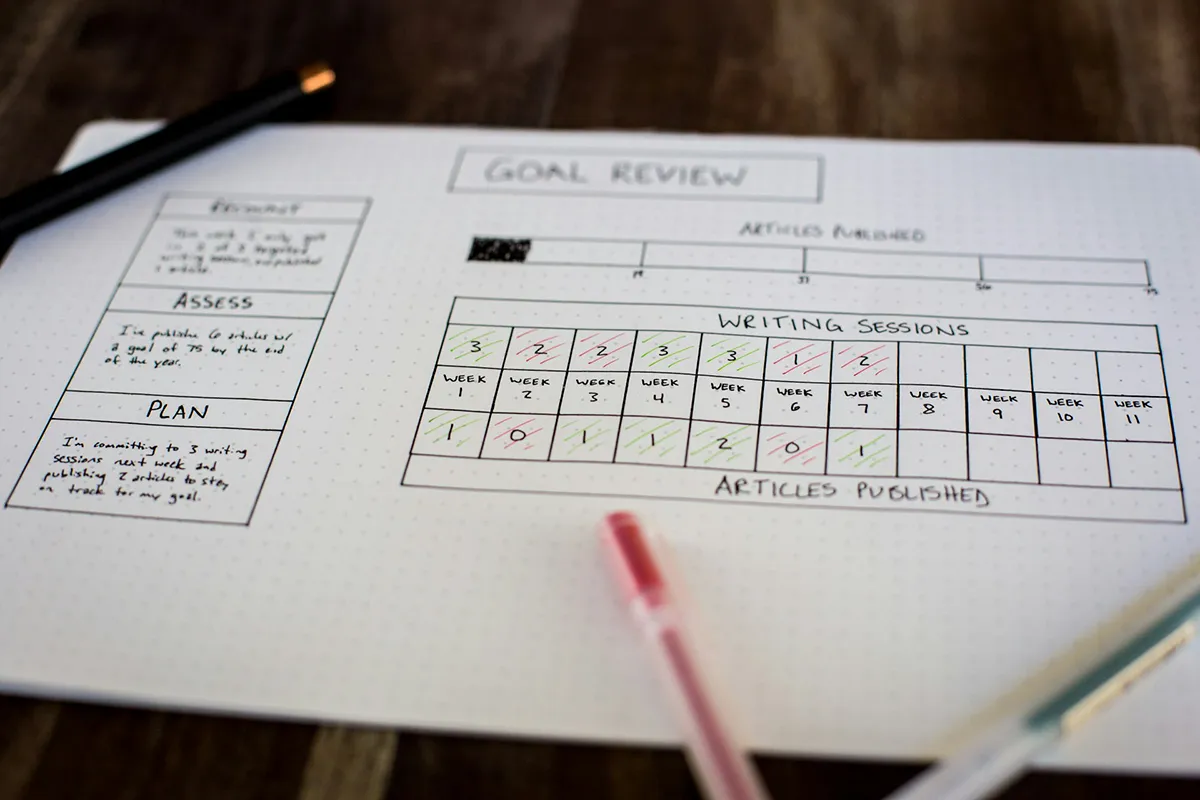
I love the idea of turning into January with a new notebook. As it happens, I’ve got seven Moleskine notebooks (AF) ready to go this year for new ventures, ideas, setting goals, plotting targets, milestones and more that I’ve become accustomed to in recent years.
But before you go reaching for the notebook of your own to write down a single goal for 2026, ask yourself: what kind of person achieves this? Not ‘what steps do I need to take?’, but ‘who do I need to be?’
If your goal is to build a successful business, the question isn’t ‘what’s my marketing strategy?’ It’s ‘am I someone who can handle rejection? Can I make decisions quickly? Will I do the boring administratitve work when nobody’s watching?’
Or, going back to the outset example, if your goal is physical transformation, forget the meal plans for the moment. Ask yourself instead: do I need to become more disciplined? More patient? More honest with myself about my excuses? More willing to embrace discomfort? (Pro tip, getting comfortable being uncomfortable can open so many doors for you. A few years of BJJ under my belt taught me that lesson pretty quickly).
If your goal is a creative one – writing that book, launching that podcast (hint, hint), finishing a project you’ve been working on, then the question becomes this: am I someone who shows up consistently? Can I silence the inner critic long enough to produce work? Am I willing to be bad at something before I’m good at it?
In each case, the goals reveal the identity gap. The indentity work closes this gap.
So, what are you willing to sacrifice?
By my reading of it, Grover is unflinching on this point. Cleaners know the price of greatness and they pay it without complaint. They don’t romanticise the grind, instead accepting it as the cost of entry.
This is where most goal-setting fals apart. People want the outcome without the identity shift. They want to lose weight while remaining someone who eats emotionally. They want career success while remaining someone who avoids difficult conversations or putting in the hard yards. they want creative achievement while remaining someone who waits for inspiration.
Indentity change requires sacrifice. This isn’t necessarily dramatic sacrifice – I’m ont talking about becoming a monk. But, you need to honestly assess what the current version of you is doing that the future version cannot afford.
Maybe it’s the comfort of sleeping in. After all, if you’re looking for that extra hour in your day to get a walk in or some training in, that extra hour in the bed in the morning may need to get dropped.
Or maybe it’s the social ease of always saying yes. Maybe it’s the familiar parttern of starting strong and fading. That mindless scrolling you get sucked into late at night? That too. Whatever it is, it has to go.
Small goals, same principle
The indentity-first approach to goal setting scales down to the most modest objectives; it’s not just for elite athletes or ambitious entrepreneurs.
If you want to read more books, then become someone who chooses books over scrolling. You’re not doing this through willpower, but genuinely identifying as a reader. 2024 was the year I ditched my phone in the evenings for a Kindle, especially when it comes to getting a few pages in at night. One of the best tech moves I ever made.
Want to be more present with your family, your children? Become someone who values attention over distraction. Let that identity inform every small decision about phones, screens and half-listening.
Or want to manage your finances better? Then become someone who respects money as a tool. Not through elaborate budgeting systems, but through a fundamental shift in how you see yourself in relation to spending.
The size of the goal is irrelevant, and the principle holds.
The version of you that’s waiting
Having filled countless pages with ink in the past 12 months, I’ve learned this: the goals you set reveal who you want to become. They’re signposts pointing towards an identity you haven’t fully claimed yet, but in order to hit those goals, you will need to claim t.
The future version of you, the one who has achieved what you’re chasing, they’re not fundamentally different from who you are now. They’ve just made different choices, consistently, until those choices become character.
So before you commit to the goals of 2026, commit first to the person that you need to become. Get specific about it. Write it down if that helps, it did for me. Identify the traits, the habits of mind, the non-negotiables. Then let every decision flow from that identity.
The goals will follow.
They always do.